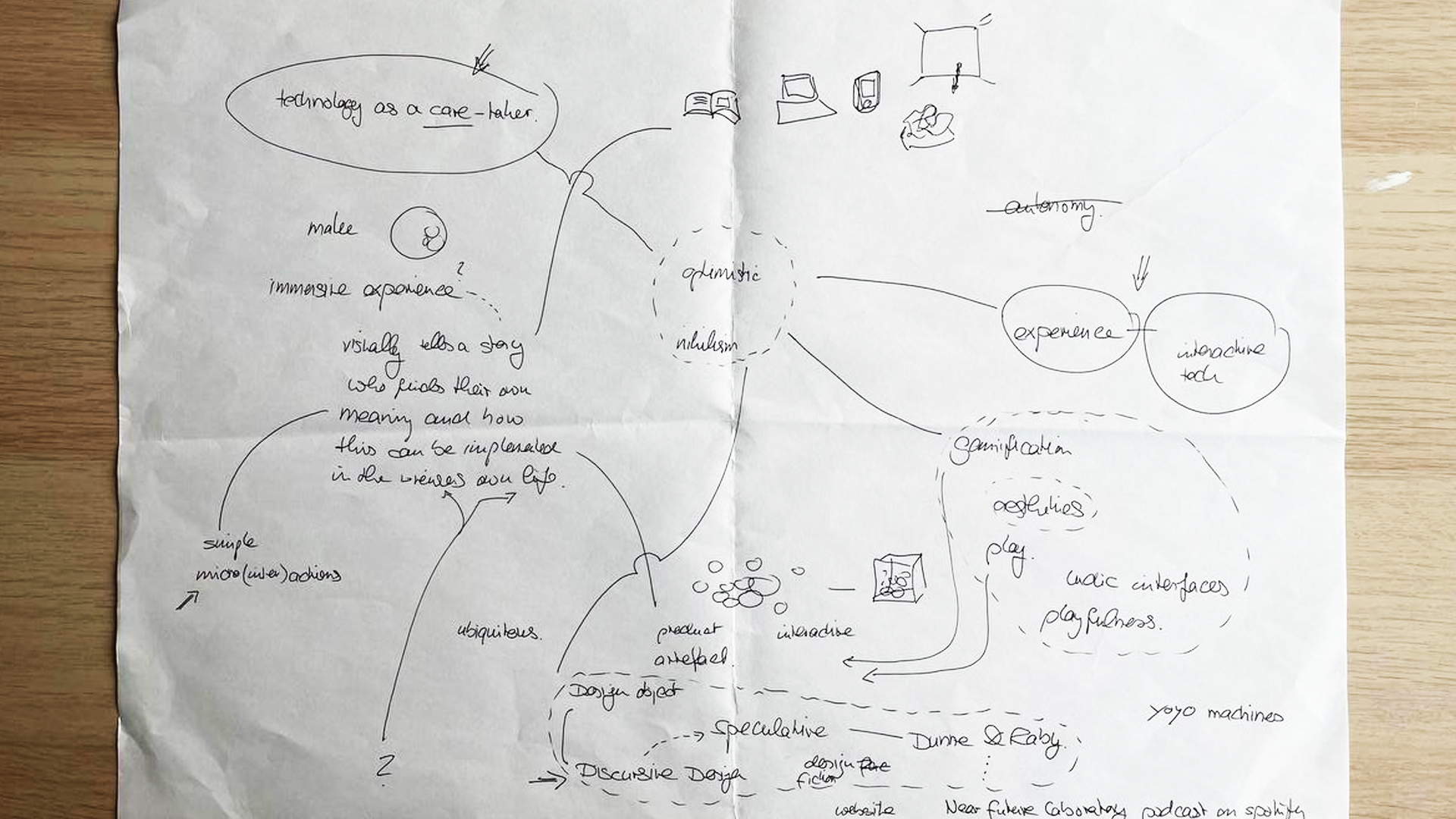
Over the previous weeks, I had been feeling extremely negative about my chosen topic. I was beginning to lose hope, and as ironic as it sounds, I lost motivation and did not feel any form of relatedness to the topic at hand. It was too broad, too intangible and I could not grasp my head around it nor come up with any creative concepts or approaches despite the tasks given to me by Andreas. We sat down and talked about it, with Andreas helping me draw a mindmap of all the key terms I blurted out while we spoke. (see cover figure)
We circled the important terms together, selecting sub-topics that had the most potential. Before this, I was already focused on narrowing down my topic to just autonomy - one of the sub topics of optimistic nihilism. Andreas told me that this was not a good idea, which is how we started with this. Technology as caretaker Interactive technology for user experience Gamification Discursive design
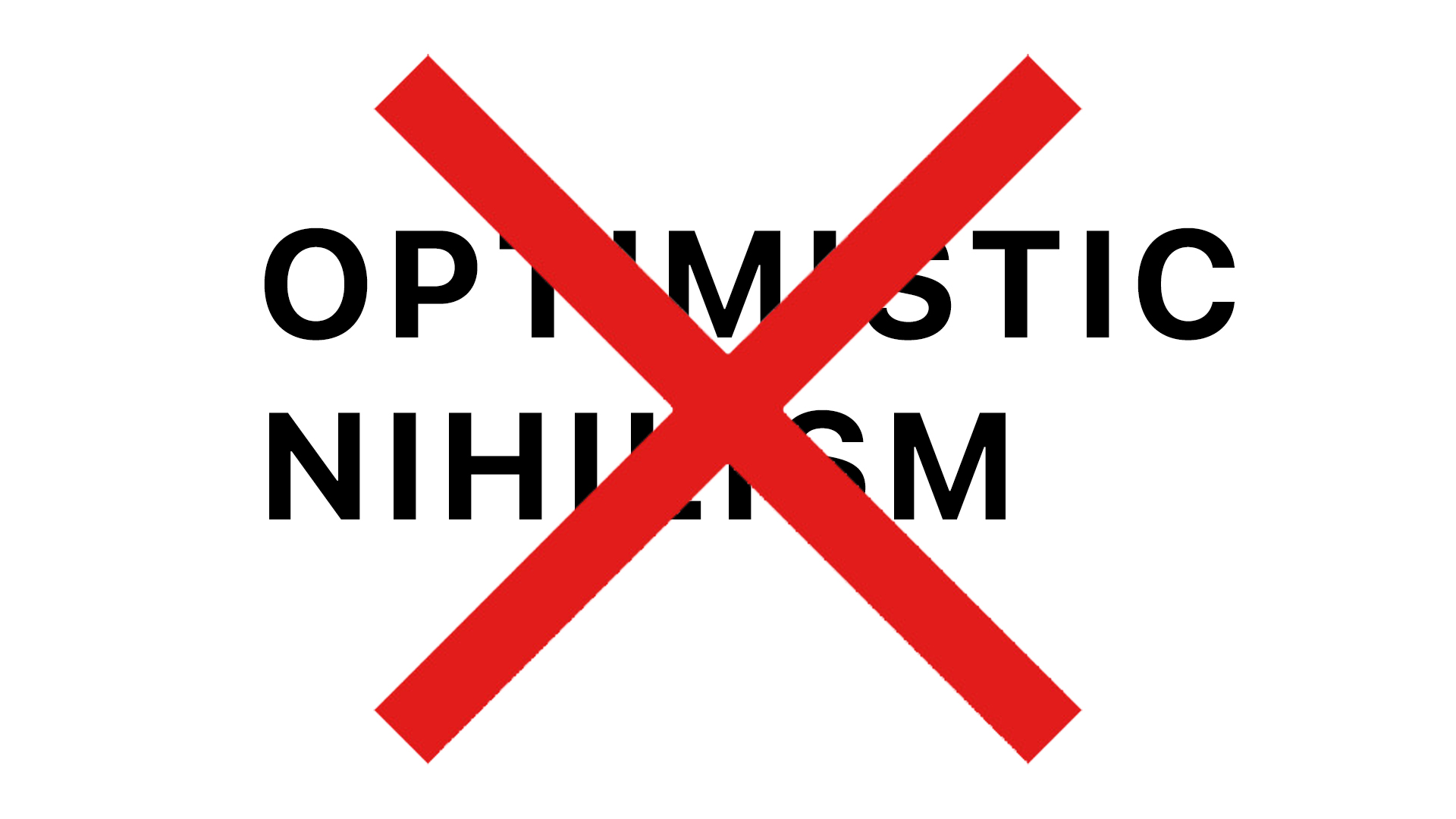
By now, it was clear that optimistic nihilism would not work. As mentioned before, there were too many concepts involved in optimistic nihilism. Although I could focus on one certain aspect of it, there was no point in using the term. Such is the nature of philosophy. Going through these new terms, there was a better direction that I could take.
I made the ultimate decision to let go of optimistic nihilism, despite all the readings I have done for it since Year 2. It was time to start anew and begin something I had a clearer vision for. I did feel sad having to do this, but I was not getting anywhere and I had to deal with it one way or another. Thankfully, this was a skill I have honed since enrolling. Goodbye.
Before I moved on, I wanted to dabble in the idea of motivation. This was something I was curious about, coupled with my desire to work on micro-interactions in hopes of applying UIUX skills I had attained in my internship/courses. Ultimately, I would like to do something that could potentially be a core piece of my portfolio when applying for UIUX roles.
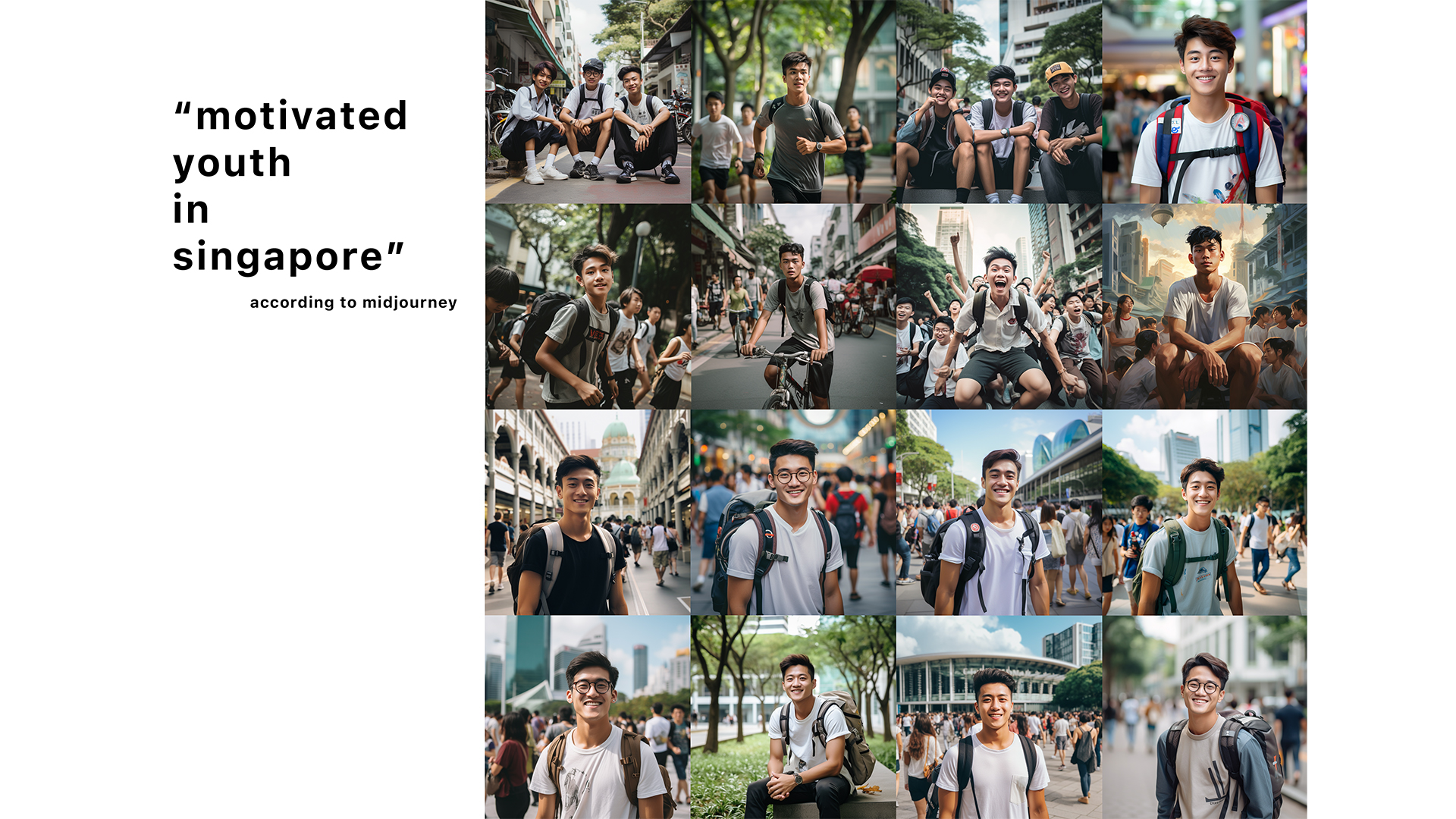
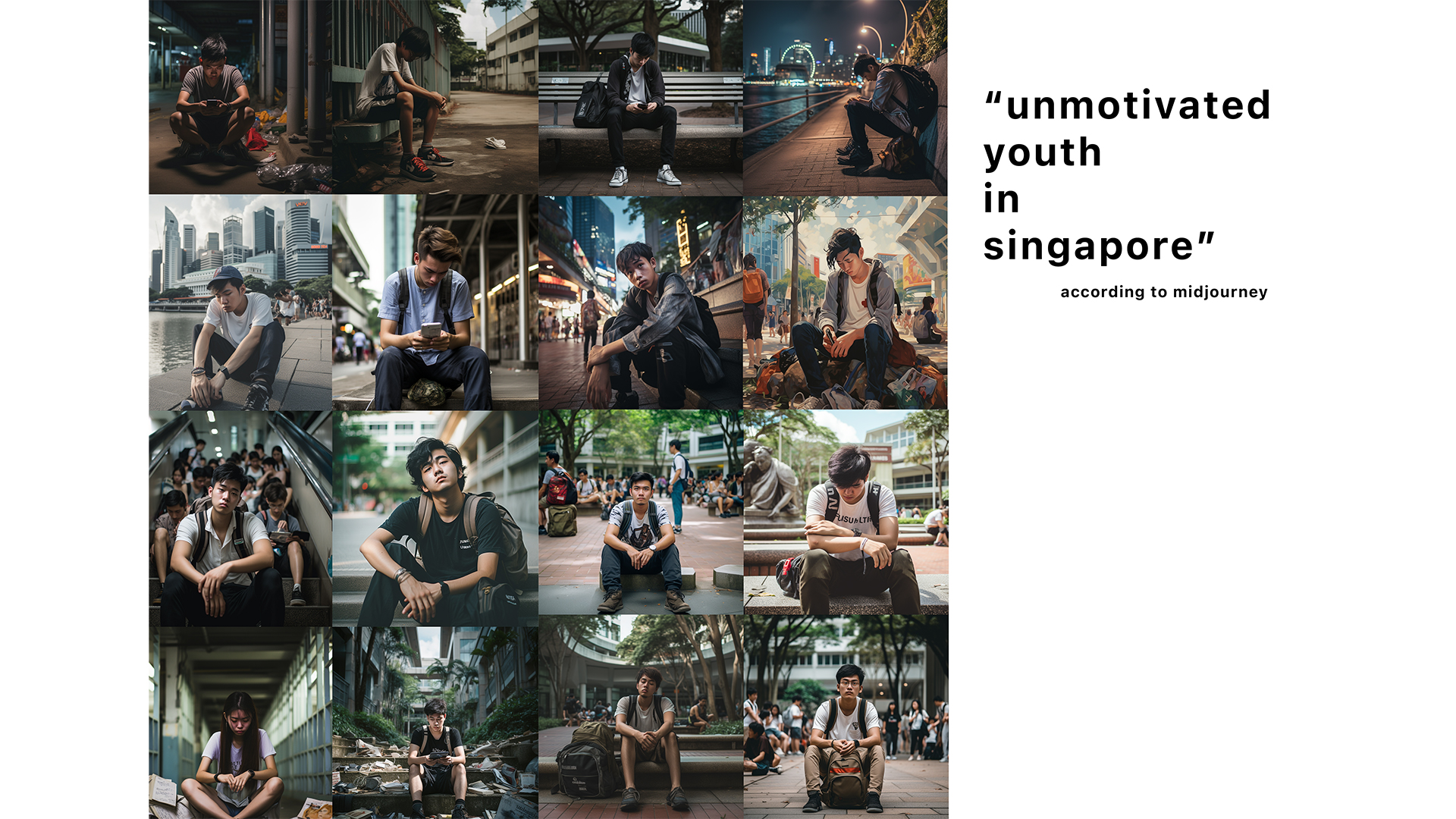
Since I still had my MidJourney subscription, I wanted to take a look into types of generated images I would get when I prompt it to imagine unmotivated or motivated youths. There was no actual goal for this. Instead, it was just to get me started.
Fairly lit background Outdoor setting Carrying backpacks Smiling Mostly wearing white tees Chinese ethnicity and boys
Being out and about outdoors, with the sunlight beaming in the background, probably signifies a heightened mood and confident sense of self. Smiling faces as the main facial expression directly correlates to the happiness of these individuals. Does being motivated mean to be happy? And vice versa?
What’s with the backpack? It could signify adventure, exploration, excitement, independence and freedom. Most of these connotations are very positive. It means these individuals are thinking about moving forward from where they are. To be motivated is to move ahead.
The white shirts may not have much metaphorical meaning, but in an attempt to look deeper into it - it could suggest simplicity, uniformity and comfort. It portrays a sense of relaxation.
As for ethnicity and gender, this may not be relevant to the research. It suggests socially inclined controversies such as misogyny, feminism and whatnot. Despite prompting the key terms ‘in Singapore’, MidJourney does not recognise that it is a multi-racial and multicultural society. Not something I want to dive into.
Dim lighting Looking down to the floor/slouching Isolated from the people around them Messy environment Only one girl/all boys
Once again, it features an all-boys cast with the exception of a single girl. Why is that the case? This makes me think that the concept of motivation only applies to boys, and girls do not feel that way.
The dim lighting conveys the moody atmosphere. A sense of loss, aimlessly hanging without reaching out for anything. The body behaviour of slouching and looking down to the floor adds to the atmosphere. The messy environment suggests a lack of care for their surroundings and an inability to conduct themselves.
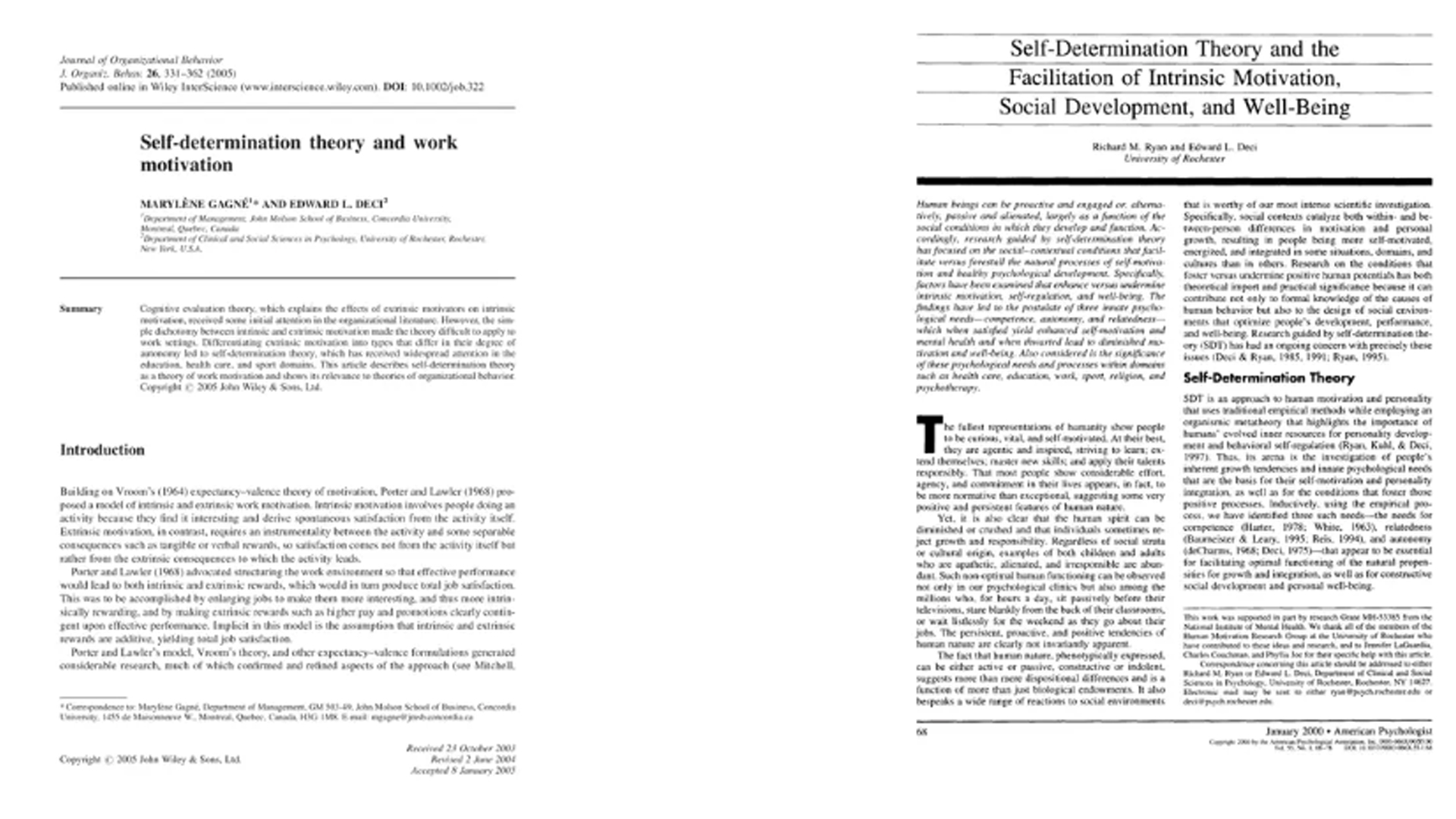
Readings for SDT
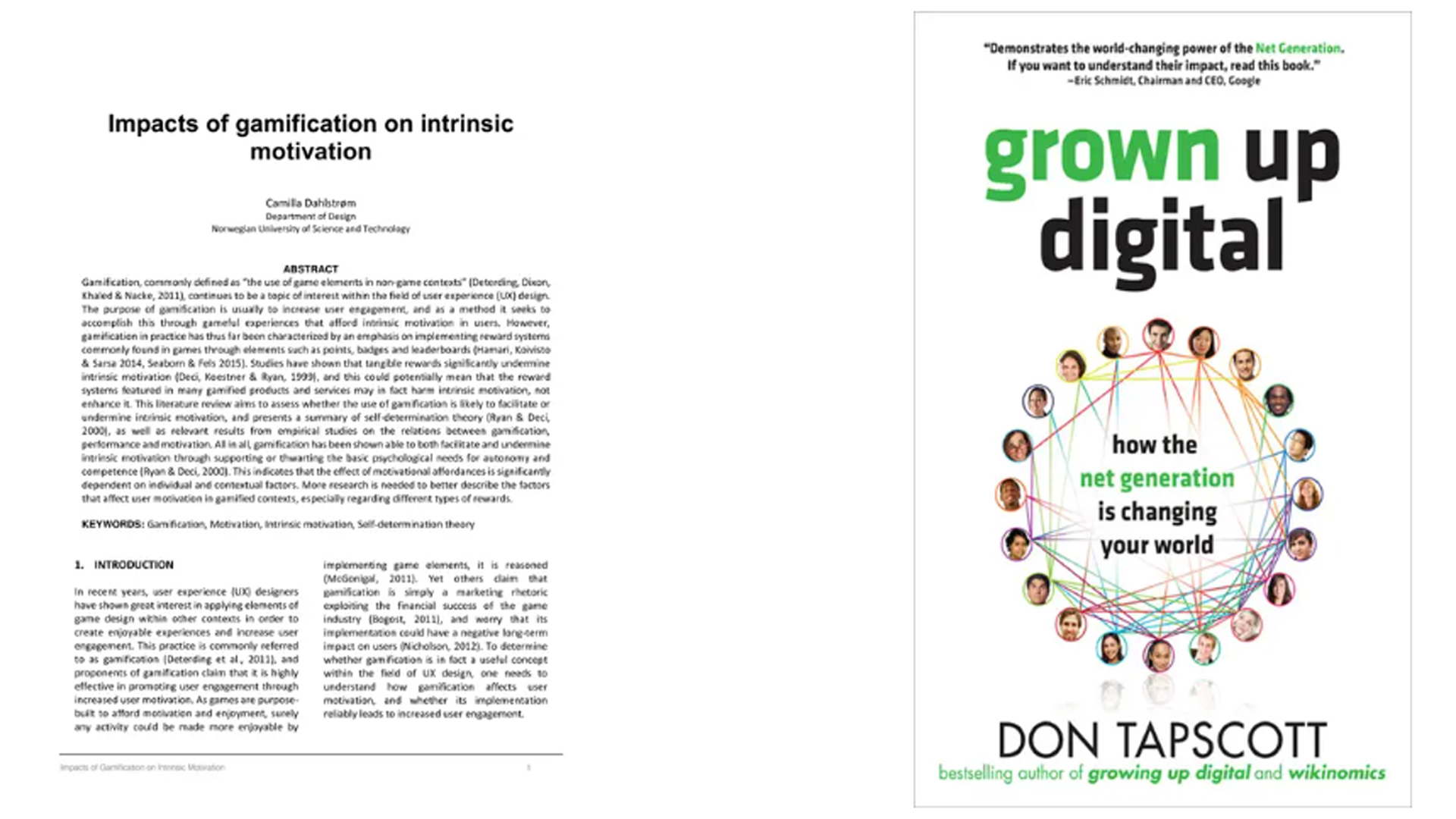
Readings for impact of gamification
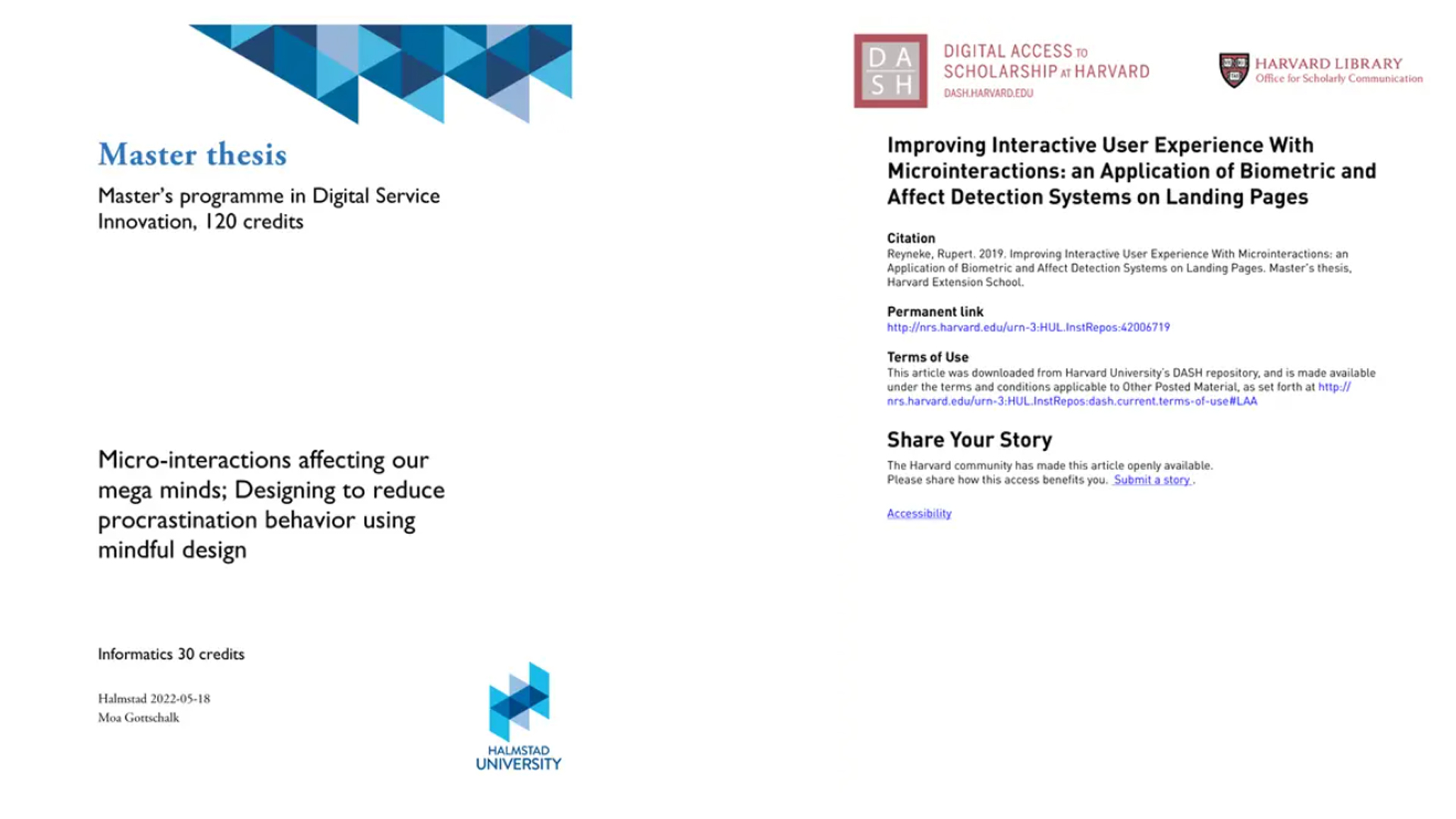
Readings for micro-interactions
Here comes a total 180 degree change to my topic - please welcome Motivation Makeover! Using all the feedback and key themes that I have uncovered over the course of these weeks, all the feelings I have experienced while trying to deal with the questionable burnout and lack of progress, and incorporating some of my interests, I have reformed my topic statement accordingly.
An exploration of establishing meaning and purpose in unmotivated youths through micro-interactions
The main purpose of the research still remains - to find meaning, purpose and ultimately motivation. However, I now have a clear demographic that I want to target- unmotivated youths. The primary mode of enabling this is through micro-interactions not limited to the digital space. To get started on the research, I narrowed down my readings to three pillars as previously done with optimistic nihilism. These pillars are self-determination theory(SDT), impact of gamification on motivation, and micro-interactions.
Self-determination theory, simply put, is a theory that talks about how we're driven by our own choices and desires. It suggests that when we feel like we have a say in what we do and our actions align with our personal values, we're more motivated and happier. In a way, it's about feeling like we're in control of our lives and doing things because we want to, not just because we have to. This theory emphasises the importance of autonomy, competence, and relatedness in our lives to boost our motivation and well-being.
Gamification, which means using game elements in non-game situations, is still a big deal in user experience design and marketing. Its main goal is to make users more engaged by making things feel like a game, so they want to do them for fun or challenge, not just for rewards or pressure from outside. It's all about letting people explore, master, and get interested naturally. When done right, gamification can boost this kind of motivation through giving people a sense of control, a chance to get better at something, and a feeling of connection with others. But if it's not done well, it can backfire and make people less motivated.
Micro-interactions are those tiny, often unnoticed, details in a product's design that can either make it better or more frustrating for users. They play a big role in how we interact with things, especially in digital stuff like social media. These small design elements have four parts: a trigger, rules, feedback, and a loop. They're a big deal in social media, where they encourage us to interact and can influence our behavior, like procrastination. But it's not just about screens; these little details are everywhere, making our interactions with things, both digital and physical, better. So, the lesson here is that small things matter a lot and can make our lives easier and more fun.